
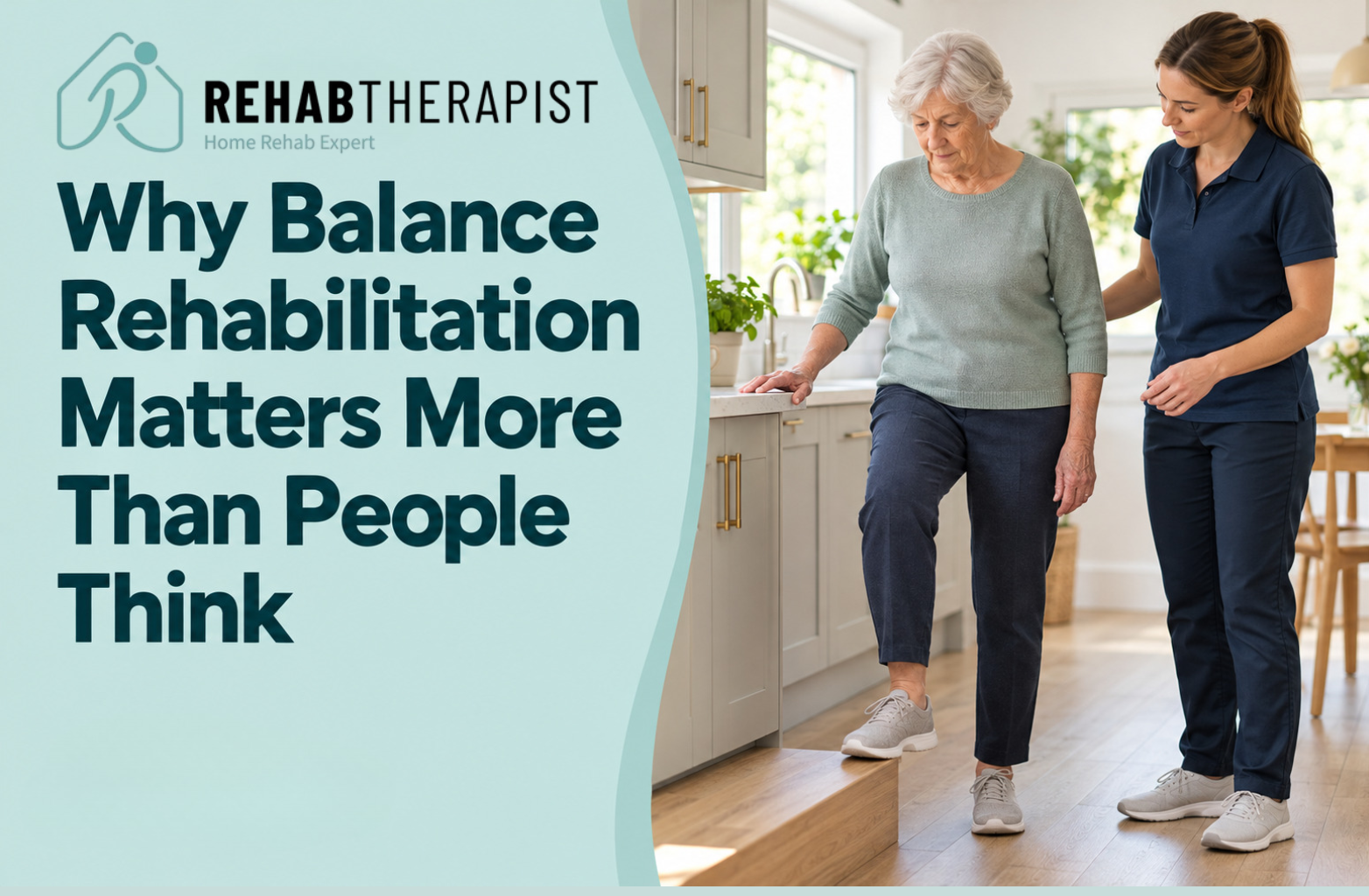
It’s easy to dismiss a near fall .You caught the chair, stayed on your feet and carried on. But afterwards, you might feel less sure about walking through that room.
It’s worth mentioning, even if you weren’t hurt.
When you feel unsteady on your feet, everyday tasks can start to feel harder. You might think twice about carrying a basket of washing upstairs or wait until someone can go out with you. Over time, worrying about falling can mean doing fewer of the things you enjoy.
At Rehab Therapist UK, our balance rehabilitation services for older adults focus from home.
Start with the problem you’ve noticed
You don’t need to know why your balance has changed before asking for help. Explain what happens in your own words.
“I’m all right walking forwards, but turning makes me wobble.”
“I struggle to stand up from the sofa.”
These details help your physiotherapist understand the difficulties you’re experiencing. During an assessment, they may watch you walk, stand up and change direction, alongside asking about your health and any falls.
Treatment could include leg strengthening, stepping practice or working on getting out of a chair. Through its elderly physiotherapy service, Rehab Therapist offers individual assessments and exercise programmes at home.
Home visits make the conversation practical
If the back step is troubling you, you can show the physiotherapist. If you struggle beside the bed, they can see how much room you have.
You can talk about what you want to manage more comfortably, too. Perhaps it’s answering the door or getting outside without needing someone beside you each time.
If walking has become more difficult , physiotherapy for mobility decline may also be relevant.
Between appointments, let your physiotherapist know if you’re finding any exercises difficult.”. If you cannot remember one, ask to go through it again. If you feel unsafe practising, tell your physiotherapist so they can review the exercise and support you need.
Get the cause checked
Balance changes shouldn’t automatically be put down to age. Balance difficulties can have several causes, including muscle weakness, eyesight problems, inner ear conditions, changes in blood pressure and the effects of certain medicines. Speak to your GP if you’ve fallen, feel dizzy or are concerned about being unsteady.
The NHS guidance for older adults recommends regular strength and balance activity. If you’re already having difficulties, ask which exercises are suitable before trying them alone.
To talk about home physiotherapy, call Rehab Therapist on 0330 551 3660 and ask to book a home visit.
Frequently Asked Questions
Should I ask for help even though I haven’t fallen?
Yes. Feeling unsteady or having near misses is worth discussing with your GP. If balance problems begin suddenly, particularly alongside facial drooping, arm weakness, speech difficulties or other new neurological symptoms, call 999, as these may be signs of a stroke
I walk regularly. Why do I still feel unsteady?
Walking regularly doesn’t rule out a balance problem. An assessment can help identify what is happening and whether particular movements need attention.
Can my partner be there during the visit?
Yes, if you’d like them there. They can ask questions and hear any advice about helping you at home.
What if the exercises are too hard?
Tell your physiotherapist. Ask them to check how you’re doing the exercise and adjust it if needed.
How many visits will I need?
That depends on your needs. Your physiotherapist will discuss a plan after the assessment and review it with you.
