
Disclaimer
This content is for informational purposes only. Please consult a qualified professional before starting any exercises. Perform movements carefully, use proper support, and stop if you feel discomfort or dizziness.
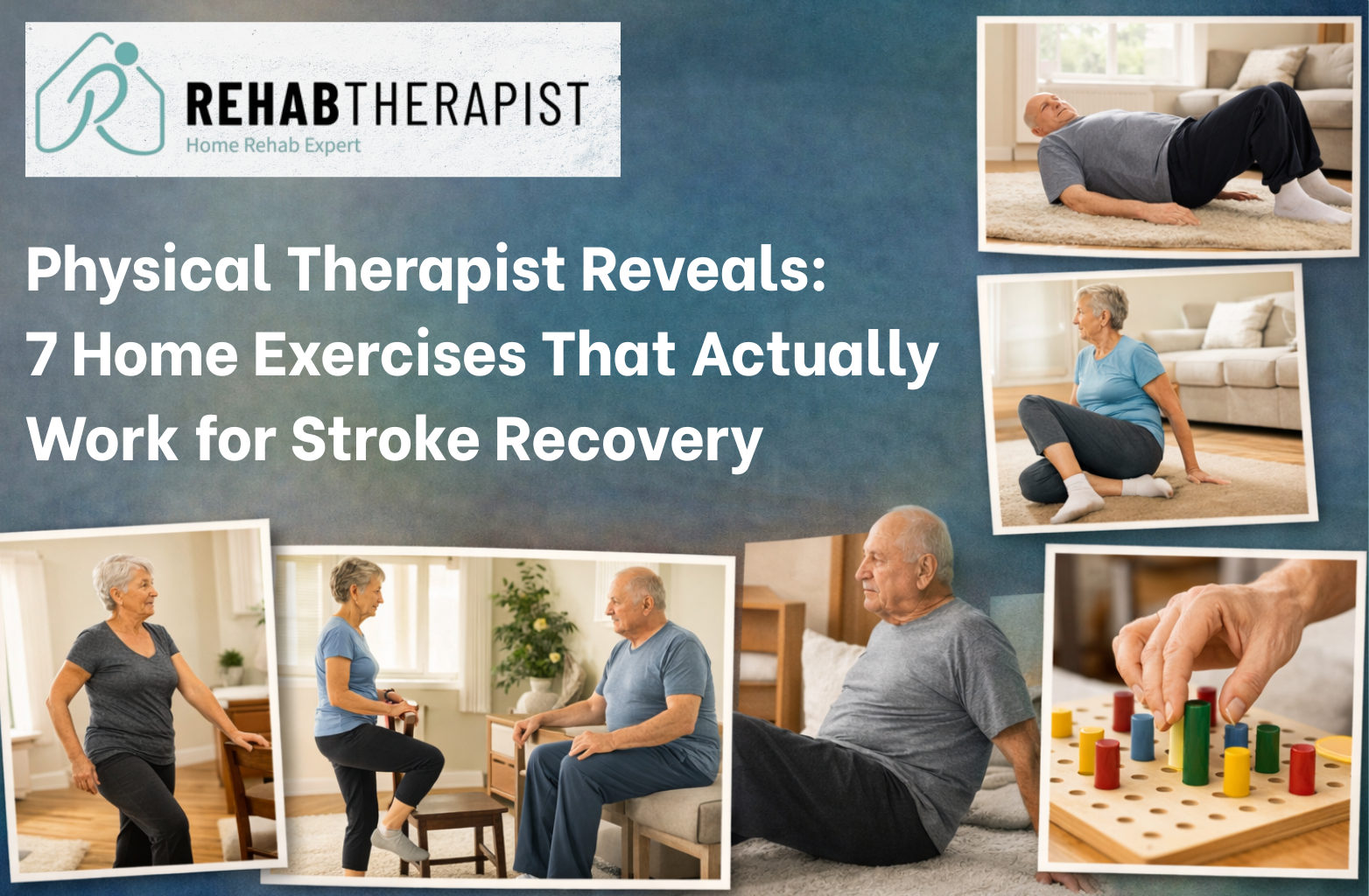
The process of recovering from strokes is an ongoing process that requires constant rehabilitation, guided therapy, and consistent training. A lot of patients see significant improvement as rehabilitation continues at home, using structured exercises developed by a trained neuro physiotherapist.
Research has shown that repetitive activities that are specific to the task help the brain create new neural connections, known as neuroplasticity. This means that doing the correct exercises regularly can increase balance, mobility and independence following a stroke.
Professionals who oversee home rehabilitation like Team RehabTherapist, help patients exercise safely and help them achieve recovery from functional impairment in their daily surroundings.
Below are seven simple exercises frequently suggested by physical therapists to help stroke recovery.
1. Seated Marching
Walking while sitting helps stimulate hip muscles and enhances lower coordination of the body. It’s a good starting exercise for people who are returning to their strength following having suffered a stroke.
Sit straight in a chair with your feet flat to the ground. Slowly raise one knee up like you are marching, and then lower it, and do the same with the second leg.
Benefits
- Supports recovery from walking
- Increases hip strength
- Enhances coordination
This simple move can retrain our brains to regulate leg movements while ensuring stability.
2. Sit-to-Stand Practice
Sit-to-stand exercises are crucial to regain independence following the stroke. This exercise mimics an everyday routine that many stroke patients have difficulty with during their rehabilitation.
Start sitting in a solid chair with your feet wide enough to be shoulder-width apart. Lean forward a bit and move your legs forward to raise your legs, then slowly recline.
Benefits
- Builds leg strength
- Improves mobility and balance
- Helps to maintain independence in everyday routine
Regularly practicing this move helps patients gain confidence when performing transfers and standing tasks.
3. Weight Shifting for Balance
The effects of stroke can affect balance and awareness of the body. Weight-shifting exercises can help train the body to distribute weight evenly between the legs.
Place your feet on a support, like a counter or a chair. Then slowly shift your weight across your body from leg one to next in a steady and upright posture.
Benefits
- Improves balance control
- Strengthens stabilising muscles
- Reduces the risk of falling
This training helps patients prepare for standing and walking activities.
4. Heel Raises
Heel raises aid in strengthening the muscles in the calf, and also improves ankle stability. These are vital for walking.
As you stand and hold your support, slowly raise your heels so that you’re in a stance on your feet. Lower your heels slowly.
Benefits
- Strengthens lower leg muscles
- Enhances walking abilities
- Improves ankle control
Regular exercise will make walking more secure and more solid.
5. Arm Reach and Stretch
The weakness of the upper limb is the typical following stroke. Arm reaching exercises aid in improving the range of motion and coordination.
Relax or sit comfortably and slowly extend one arm in the direction of forwarding, and return it to the starting position. It is also possible to practice reaching towards the side or up.
Benefits
- Enhances arm mobility
- Strengthens shoulders muscles
- Assists in daily tasks, such as lifting and reaching
Repetition is the key to help the brain to regain control of impaired arm movements.
6. Step Practice
Step training can help patients re-learn walking patterns and helps improve coordination in the lower limbs.
Secure yourself to a firm surface and practice moving one foot forward before returning it to its starting position. Repeat the exercise with the second leg.
Benefits
- Improves walking coordination
- Strengthens leg muscles
- Enhances confidence when performing mobility tasks.
Step exercises are an important aspect of recovering independence in movement.
7. Finger and Hand Exercises
Stroke can impact fine motor control in hands. Gentle hand exercises can help build the strength of your hands and improve coordination.
Students are able to practice opening and closing their hands by alternating between squeezing and opening an ice ball.
Benefits
- Increases grip strength
- Enhances finger coordination
- Helps with everyday tasks, such as holding objects
These exercises are particularly beneficial to increase independence in everyday things like eating and dressing.
Tips for Safe Home Stroke Rehabilitation
While these exercises are able to aid the recovery process, it is vital that rehabilitation for strokes is supervised by a trained professional. A neuro physiotherapist who is specialised will ensure that exercises are suitable to the individual’s condition and stage of recovery.
The most important safety considerations are:
- Begin slowly, and increase intensity gradually
- Use solid support surfaces whenever you need to
- Stop exercising if there are symptoms of dizziness or pain.
- Get help from rehabilitation specialists.
A consistent practice, paired with expert assistance will result in the most effective results.
Why Home Physiotherapy Supports Stroke Recovery
Therapists at home can create exercises that directly aid the patient’s daily activities as well as the environment in which they live.
Benefits of physiotherapy at home include:
- Rehabilitation in a familiar, relaxed environment
- Training exercises that are adapted to your home environment
- Improved engagement of patients and more motivation
- Less stress on travel for those with mobility impairments
This personalised approach can help those who have suffered a stroke regain their independence more efficiently.
Conclusion
Recovery from stroke requires constant treatment, guided exercises and a personalised rehabilitation plan. Training specific movements like standing-to-sit training as well as balance exercises and arm mobility exercises will significantly increase strength as well as coordination and a sense of independence.
But, the most efficient recovery occurs when exercises at home are assisted by experts with years of experience. The expert team RehabTherapist provides expert home neuro physiotherapy services to help stroke patients continue their rehabilitation at their home.
In the event that you, or someone else you know suffers from a stroke, a professional home-based rehabilitation could make a difference. Get in touch with a RehabTherapist to find out how personalised neurophysiotherapy can aid in recovery and enhance living quality.
