
Private Paediatric Physiotherapy in Kensington and Chelsea
About Children's Physiotherapy in Kensington and Chelsea
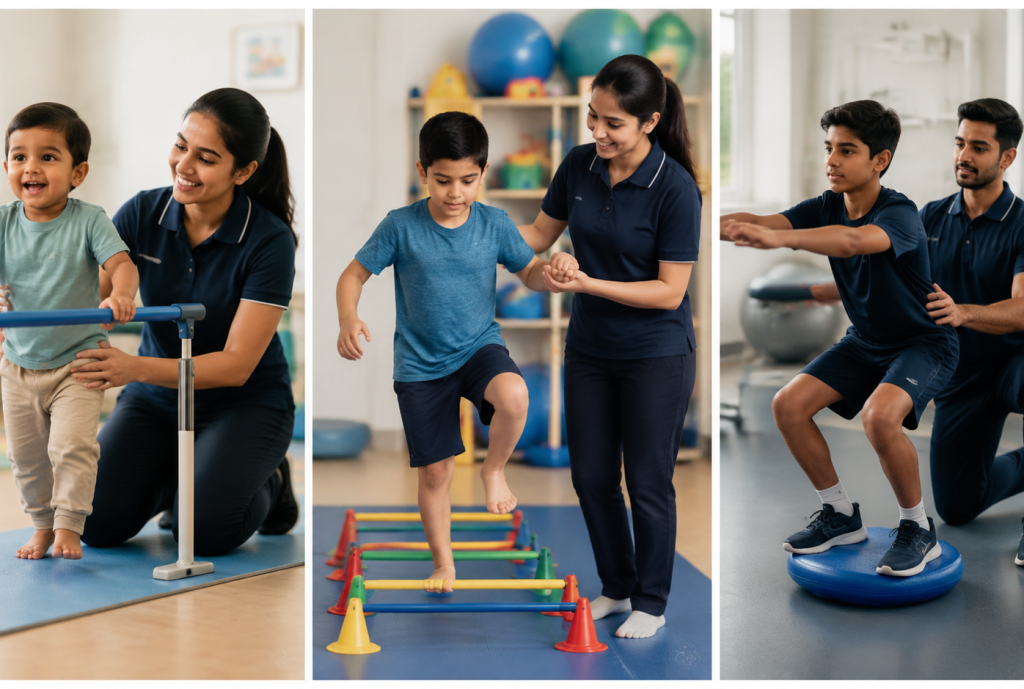
Kensington and Chelsea is home to families across well-established residential neighbourhoods, busy central areas and diverse local communities. Our home-based paediatric physiotherapy service supports babies, children and young people across the borough, providing personalised care in a familiar environment where your child can feel comfortable and confident.
At Rehab Therapist Kensington and Chelsea, our private paediatric physiotherapists support children with a range of developmental, neurological, orthopaedic and mobility needs. Your child may need help working towards early developmental milestones, improving walking, balance and coordination, building strength for everyday activities, or recovering following an injury or operation. Physiotherapy is tailored to their individual abilities, needs and goals.
By providing physiotherapy at home, treatment can be based around your child’s usual routine and surroundings. Parents and carers can also be involved where appropriate, making it easier to continue suitable exercises and activities between sessions. The aim is to keep rehabilitation practical, child-focused and relevant to everyday life.
Our local paediatric physiotherapists serve areas across Kensington and Chelsea, including Brompton, Chelsea, Earls Court, Golborne, Holland Park, Kensington, Knightsbridge, Ladbroke Grove, North Kensington, Notting Hill, Portobello, Sloane Square, South Kensington, West Kensington and World’s End.
Postcode districts covered: SW3, SW5, SW7, SW10, W8, W10, W11 and W14.
Conditions We Support in Kensington and Chelsea
Children are referred for physiotherapy for many different reasons. The important consideration is not simply the name of a condition, but how it affects the child’s movement, mobility and ability to take part in everyday activities.

Developmental Delay
Stroke Rehabilitation
Cerebral Palsy
Traumatic Brain Injury (TBI)
Down Syndrome & Genetic Conditions
Multiple Sclerosis
Plagiocephaly (Flat Head Syndrome)
Parkinson's disease
Torticollis (Neck Tightness)

Preterm Babies

Neurological Conditions

Neuromuscular Disorders

Developmental Coordination Disorder (Dyspraxia)
Functional Neurological Disorder (FND)
Post-Fracture & Post-Surgery Rehabilitation

Sports Injuries in Children & Teens

Musculoskeletal Conditions
Elderly RehabilitationWho We Support in Kensington and Chelsea
Private Children’s physiotherapy needs change considerably as they grow. Physiotherapy for a baby learning to sit will look very different from rehabilitation for a teenager returning to normal activity after an injury.
Babies & Infants in Kensington and Chelsea
For babies, physiotherapy may focus on early movement and positioning. Support can include activities relating to head control, rolling, sitting and the gradual development of independent movement.
Toddlers Developing Movement Skills in Kensington and Chelsea
As children become more active, difficulties with standing, walking, balance or coordination can become more noticeable. Physiotherapy can provide structured support while these movement skills develop.
School-Age Children in Kensington and Chelsea
School-age children may need physiotherapy when mobility, strength, posture, balance or coordination makes everyday physical activity more difficult. Treatment can be adapted around the movements and activities that are relevant to them.
Teenagers in Kensington and Chelsea
Physiotherapy for teenagers may focus on strength, mobility and returning to everyday physical activity following an injury, operation or period when movement has been limited.
Children with Neurological or Developmental Needs
Some neurological and developmental conditions can affect muscle control, posture, coordination, balance and mobility. Physiotherapy can focus on practical movement goals that are appropriate for the individual child.
Children Following Injury or Surgery
After an injury, fracture or orthopaedic procedure, children may need time and structured rehabilitation to regain movement and confidence. Physiotherapy can be progressed gradually according to their stage of recovery.
How Our Paediatric Physiotherapy Can Help in Kensington and Chelsea
There is no single exercise programme that suits every child. Physiotherapy is selected according to what the child finds difficult and what they are working towards.
Early Developmental Skills
For younger children, therapy may focus on developing control during rolling, sitting, crawling, standing and early walking.
Walking & Everyday Mobility
Where walking is difficult or less stable, the physiotherapist can look at how the child moves and identify suitable activities to practise mobility and movement control.
Strength for Everyday Activities
Children need strength for many ordinary activities, from getting up from the floor to walking, climbing stairs and playing. Exercises can be adapted to the child’s age and abilities.
Balance & Coordination
Activities may be used to develop steadiness, coordination and awareness of body position during standing, walking and play.
Trips, Falls & Unsteadiness
Frequent trips or difficulty staying steady may have several contributing factors. A physiotherapy assessment can look at the child’s movement and identify areas that may benefit from support.
Muscle Weakness or Reduced Movement
Children with weakness, stiffness or difficulty controlling movement may benefit from appropriately selected exercises, stretching and functional activities.
Posture & Positioning
Advice may be provided around sitting, standing and positioning where these affect comfort, movement or participation in everyday activities.
Neurological & Developmental Physiotherapy
For children with neurological or developmental needs, treatment may focus on functional movement, mobility, balance, coordination and muscle control.
Rehabilitation Following Injury
After an injury, physiotherapy can help a child gradually practise movement again and rebuild strength for everyday activities.
Rehabilitation Following Surgery
Post-operative rehabilitation can be adapted as the child progresses, taking account of their current mobility, physical needs and stage of recovery.
Activities to Continue Between Visits
Where useful, the physiotherapist may suggest manageable activities for the family to continue between appointments rather than providing an unnecessarily complicated routine.
Guidance for Parents & Carers
Parents and carers can be shown practical ways to support movement and practise relevant activities safely within the child's normal daily routine.
Therapy Examples – How Physiotherapy May Be Adapted
What happens during a paediatric physiotherapy session depends on the child in front of the physiotherapist. Activities are chosen for a reason and adjusted as the child develops, recovers or becomes more confident with movement.
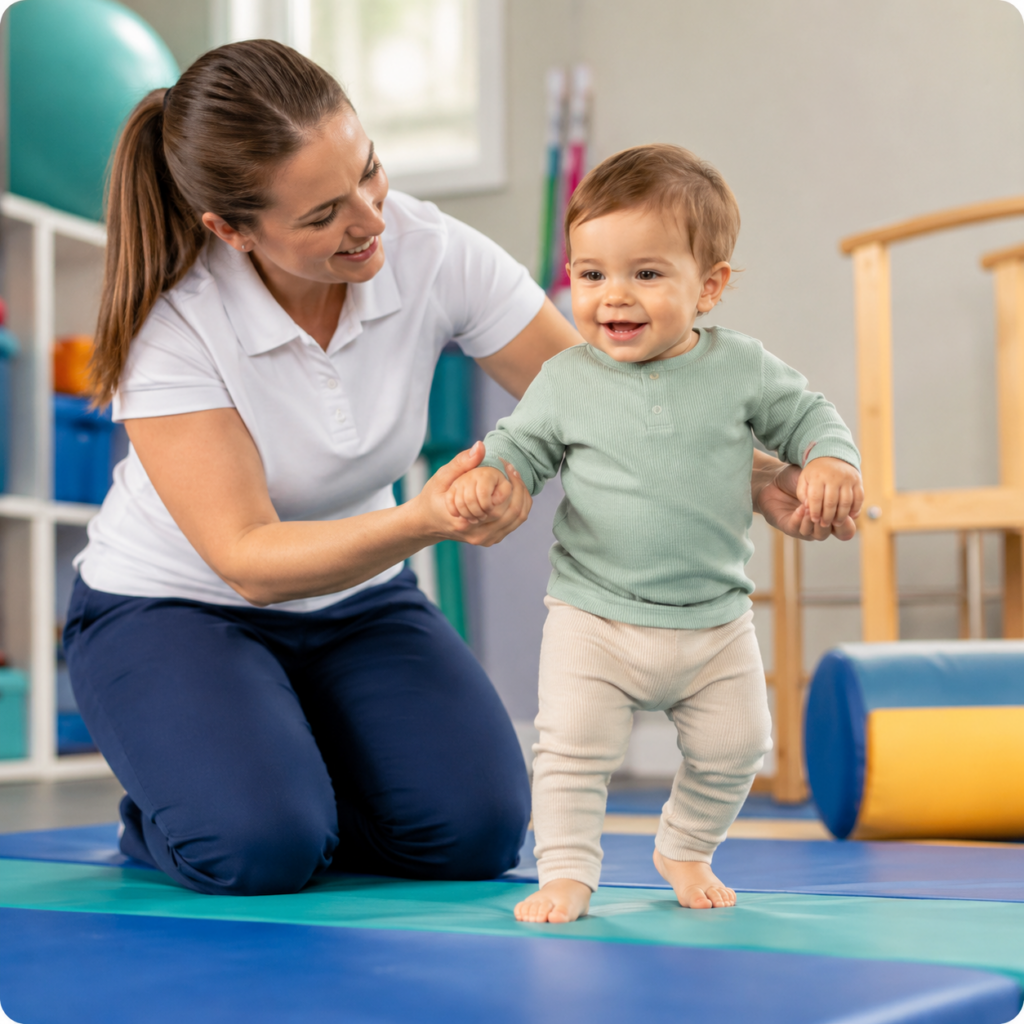
Babies & Toddlers
A session might involve:
- Exploring different comfortable positions
- Encouraging movement through play
- Practising reaching, turning and rolling
- Developing sitting balance and trunk control
- Moving from the floor into sitting or standing
- Supported standing and early stepping
- Practising crawling and other forms of floor mobility
- Using toys and familiar activities to encourage movement
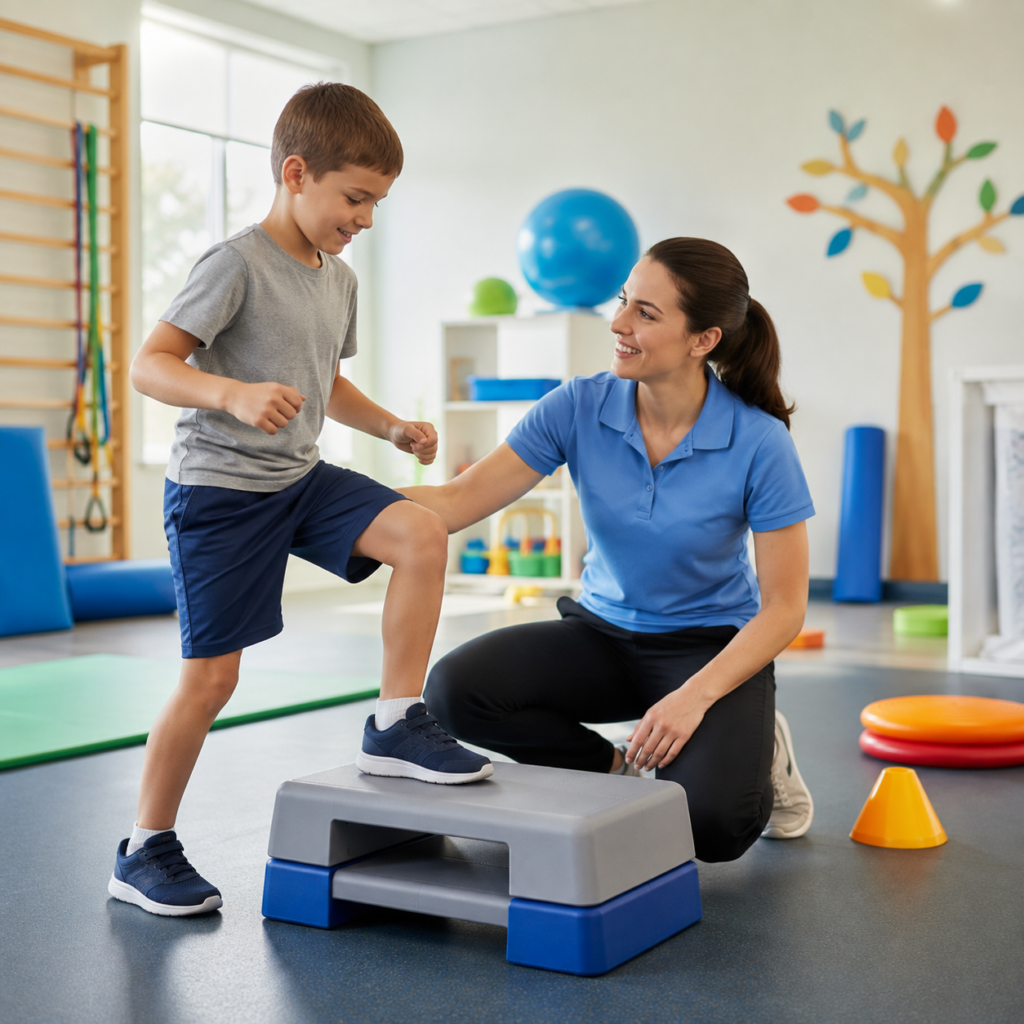
School-Age Children
Physiotherapy might include:
- Practising controlled changes of direction
- Strengthening through age-appropriate activities
- Improving steadiness during standing and walking
- Working on coordination during functional tasks
- Practising stairs and changes between positions
- Developing confidence with larger body movements
- Mobility activities based around the home
- Simple exercises that can be repeated between sessions
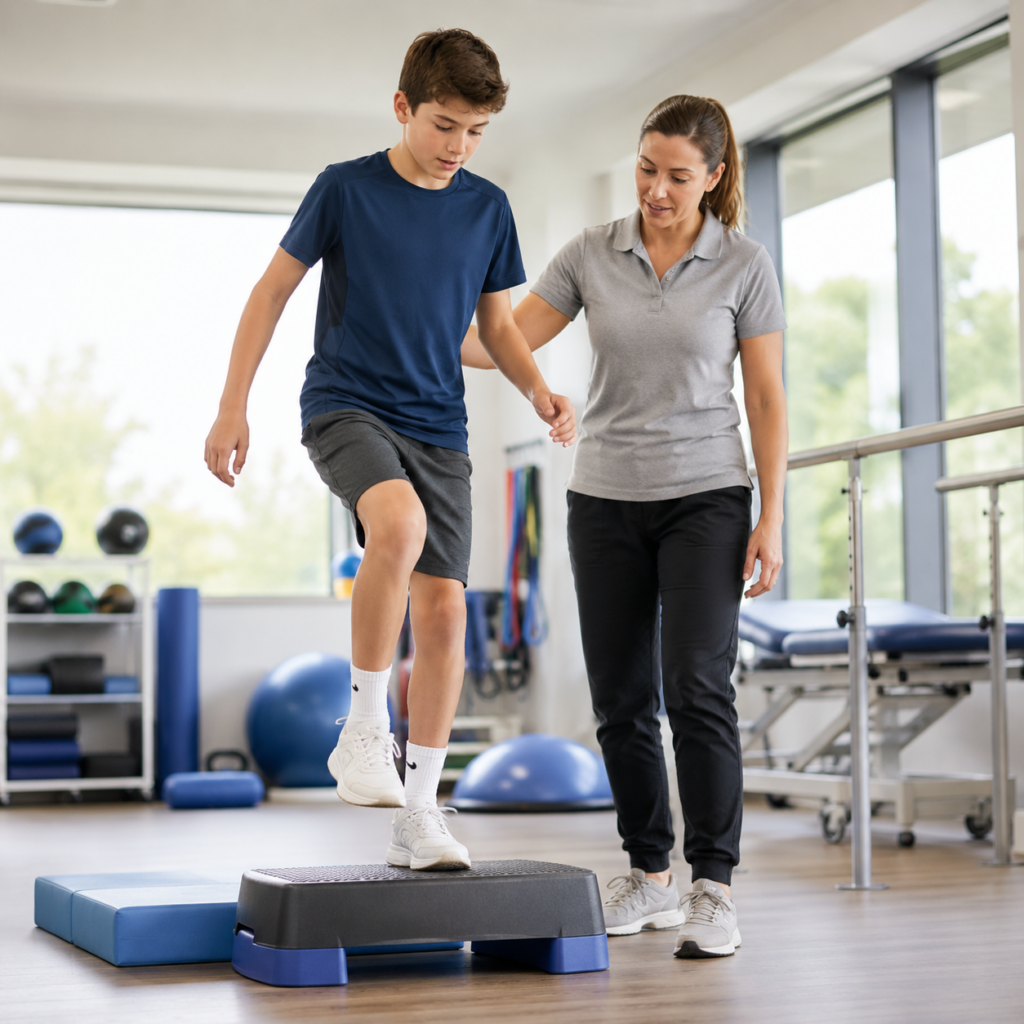
Teenagers, Sport & Rehabilitation
Rehabilitation may involve:
- Gradually rebuilding strength
- Improving flexibility and comfortable movement
- Practising balance and lower-limb control
- Functional exercises linked to everyday activity
- Rehabilitation following injury or surgery
- Progressing exercise difficulty when appropriate
- Preparing for a return to usual physical activities
- Developing an achievable programme to continue independently
Our Service Areas in Kensington and Chelsea
We proudly serve the following communities: Click here
- Private Paediatric Physiotherapy in Aldgate | Children’s Physiotherapy in Aldgate
- Private Paediatric Physiotherapy in Aldersgate | Children’s Physiotherapy in Aldersgate
- Private Paediatric Physiotherapy in Bank | Children’s Physiotherapy in Bank
- Private Paediatric Physiotherapy in Barbican | Children’s Physiotherapy in Barbican
- Private Paediatric Physiotherapy in Blackfriars | Children’s Physiotherapy in Blackfriars
- Private Paediatric Physiotherapy in Cannon Street | Children’s Physiotherapy in Cannon Street
- Private Paediatric Physiotherapy in Cheapside | Children’s Physiotherapy in Cheapside
- Private Paediatric Physiotherapy in Farringdon | Children’s Physiotherapy in Farringdon
- Private Paediatric Physiotherapy in Fleet Street | Children’s Physiotherapy in Fleet Street
- Private Paediatric Physiotherapy in Holborn | Children’s Physiotherapy in Holborn
- Private Paediatric Physiotherapy in Liverpool Street | Children’s Physiotherapy in Liverpool Street
- Private Paediatric Physiotherapy in Ludgate Hill | Children’s Physiotherapy in Ludgate Hill
- Private Paediatric Physiotherapy in Mansion House | Children’s Physiotherapy in Mansion House
- Private Paediatric Physiotherapy in Moorgate | Children’s Physiotherapy in Moorgate
- Private Paediatric Physiotherapy in Monument | Children’s Physiotherapy in Monument
- Private Paediatric Physiotherapy in Old Street | Children’s Physiotherapy in Old Street
- Private Paediatric Physiotherapy in Smithfield | Children’s Physiotherapy in Smithfield
- Private Paediatric Physiotherapy in St Paul’s | Children’s Physiotherapy in St Paul’s
- Private Paediatric Physiotherapy in Temple | Children’s Physiotherapy in Temple
Frequently Asked Question
You can also give us a call if you have any questions
Is local paediatric physiotherapy available across Kensington and Chelsea?
Yes. our local home-based local paediatric physiotherapy across Kensington and Chelsea, including Brompton, Chelsea, Earls Court, Golborne, Holland Park, Kensington, Knightsbridge, Ladbroke Grove, North Kensington, Notting Hill, Portobello, Sloane Square, South Kensington, West Kensington, and World’s End.
Can a paediatric physiotherapist visit my child at home in Chelsea or South Kensington?
Yes. Home visits can be arranged in Chelsea, South Kensington and other areas we cover, subject to therapist availability.
Which postcodes do you cover in Kensington and Chelsea?
We cover SW3, SW5, SW7, SW10, W8, W10, W11 and W14. Please provide your full postcode when enquiring so we can confirm coverage.
My child is learning to walk. Could physiotherapy help?
Yes. Paediatric physiotherapy can support children who need help with standing, balance, walking and other developmental movement skills.
Can home physiotherapy help my child practise stairs and moving around the house?
Yes. Home physiotherapy can include practising stairs, getting up from the floor, walking around the home and other everyday movements relevant to your child.
Do parents need to be present during paediatric physiotherapy?
Parents or carers can be involved in sessions, particularly with younger children. We can also show you suitable activities to practise between visits.
Do you support children returning to activity after a fracture or operation?
Yes. We provide home-based rehabilitation for children following fractures, injuries or orthopaedic surgery, with physiotherapy adapted to their stage of recovery.
How can I arrange a home paediatric physiotherapy assessment in Kensington and Chelsea?
Contact Rehab Therapist with your child’s needs and full postcode. We can check local therapist availability and discuss the next steps for arranging an assessment.
