
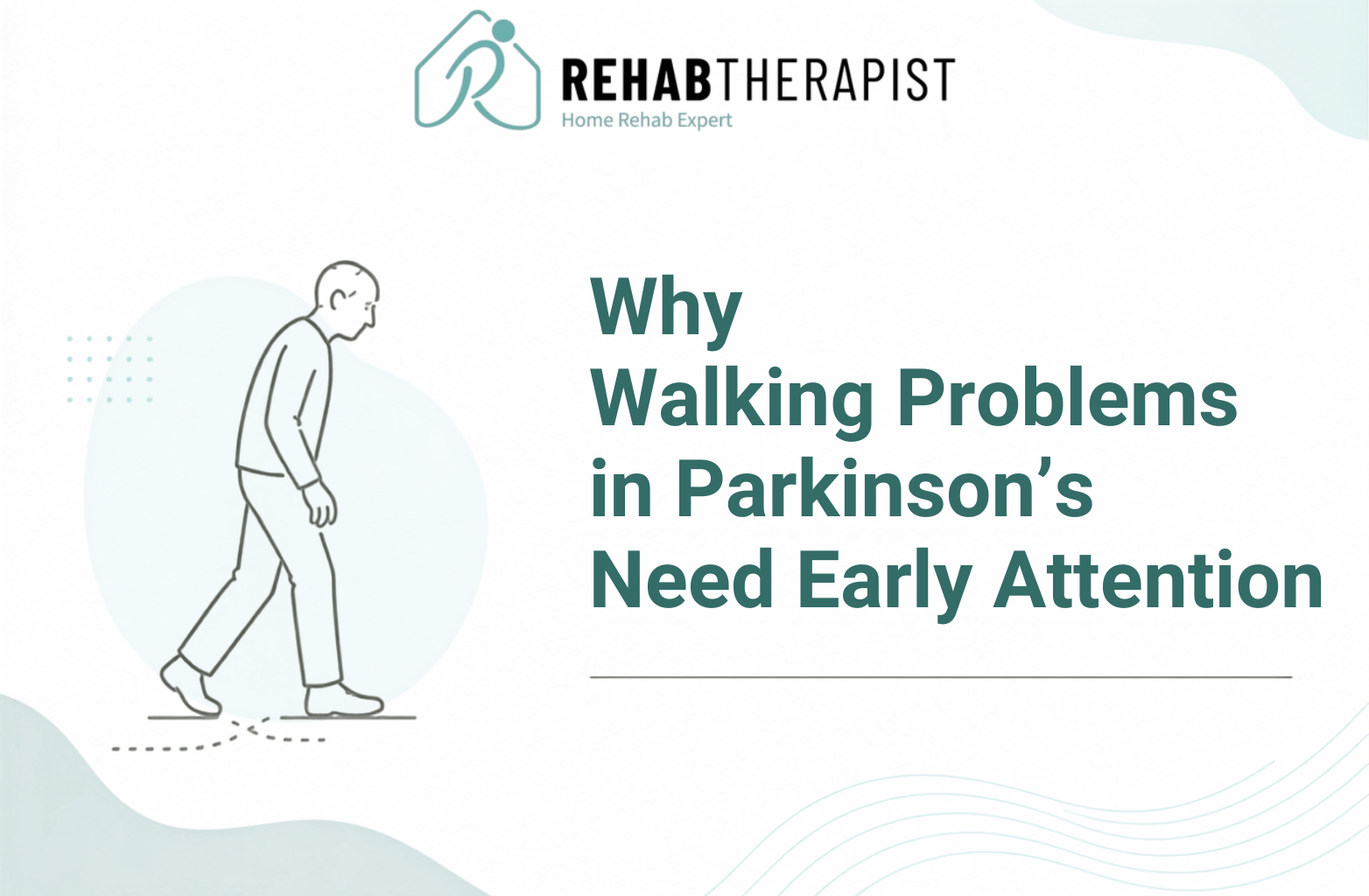
Walking changes in Parkinson’s can begin quite quietly.
A person may start taking shorter steps, walking a little more slowly or finding it harder to turn. At first, these changes may not seem too serious, especially if they are still managing around the house.
But over time, walking problems in Parkinson’s can affect confidence, balance and independence. That is why it is worth noticing them early rather than waiting until walking becomes much more difficult.
What can change with walking?
Parkinson’s can affect movement in different ways.
Some people begin to shuffle. Others find that their steps become smaller or that it takes longer to get moving after standing still.
Turning can feel awkward too, and some people experience freezing. This is when the feet suddenly seem stuck even though the person is trying to move forward.
Parkinson’s UK has useful information about freezing and walking difficulties.
These problems can come and go. They may be more noticeable when someone is tired, distracted or trying to move through a narrow space.
Why it is better to look at it early
When walking starts to feel less safe, people often change their routine without really noticing.
They may stop going out as much, hold onto furniture or avoid stairs. Sometimes they simply walk less because they are worried about falling.
That can lead to a loss of strength and confidence over time.
Early Parkinson’s physiotherapy can help by looking at the way someone is actually moving. This might include balance, step length, turning, posture and how steady they feel when walking.
The aim is not to make walking perfect. It is to make everyday movement feel safer and easier to manage.
Everyday movement matters most
For many people, the biggest problems are not during exercise. They happen during normal daily life.
It might be turning in a small kitchen, walking through a doorway, getting to the bathroom at night or starting to move after getting up from a chair.
This is where home visit physiotherapy can be helpful. The physiotherapist can see the person in their own surroundings and understand where the real difficulties are happening.
Small changes in the way someone moves, turns or uses support can sometimes make daily life much easier.
Don’t wait for a fall
A fall is not the only reason to ask for help.
If someone is shuffling more, freezing more often, losing confidence or avoiding walking because they feel unsafe, it is worth discussing this with their GP, Parkinson’s team or physiotherapist.
Getting support earlier can make it easier to deal with problems before they start limiting everyday life.
FAQs
What walking problems can happen in Parkinson’s?
Common changes include smaller steps, slower walking, shuffling, difficulty turning and freezing.
What is freezing in Parkinson’s?
Freezing is when someone wants to move but their feet temporarily feel stuck. It often happens when starting to walk, turning or moving through a narrow space.
Can physiotherapy help with walking problems in Parkinson’s?
Yes. Physiotherapy can help with balance, strength, walking, turning and practical strategies for moving more safely.
When should I ask for help with walking changes?
If walking is becoming less steady, slower or is starting to affect confidence and daily activities, it is worth getting advice early.
Can Parkinson’s physiotherapy be done at home?
Yes. Home physiotherapy can be useful because the therapist can look at walking and movement in the place where the person spends most of their time.
