
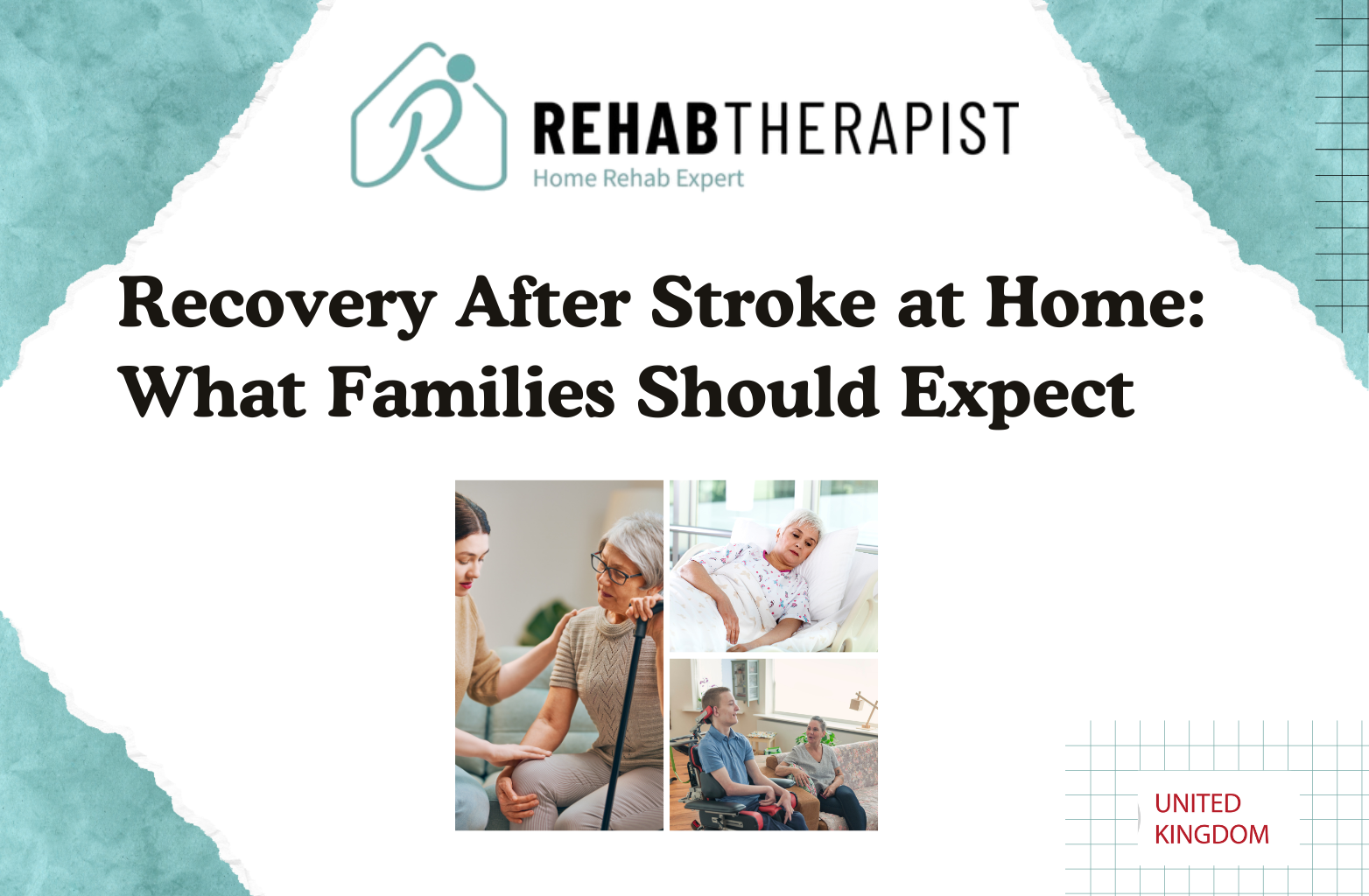
The journey doesn’t stop once a patient is discharged from a hospital after a stroke. Many ways this is the point at which recovery really starts.
Family members, the phase is often a time of uncertainty. It is possible that you are contemplating what your next step will be like, what assistance is required, and what you should and should not be doing. The reality is that the recovery process after a stroke at home can differ for each person. However, with the right direction, it can be an organised and positive process.
At Rehab Therapist we assist patients and their families throughout this phase by offering specialised neurological physiotherapy in the home, and focusing on recovery of confidence, self-confidence, and self-reliance.
The first days of home: what should you expect?
The initial few weeks following discharge are usually the most difficult.
Your beloved one could:
Feel tired or weak physically
Struggle to walk or balance, or struggle with struggle to balance when walking are unable to use one side of their body
You may require assistance with your everyday tasks if you are anxious, angry or depressed.
This is totally normal.
The brain and body are still recuperating as they take some time to adjust back to a normal environment. Even the most basic activities can be exhausting at first.
Recovery is not always linear
The most crucial aspects families must be aware of is that:
The path after stroke is not always an even line.
Certain days may feel better than others. There might be minor improvement in your condition, but then you will experience more sluggish periods. It doesn’t mean that the recovery process has stopped; it is simply a sign that the body is adjusting.
Be patient, consistent and the correct rehabilitation strategy make the most impact over time.
What is the stroke rehabilitation process at home involved?
1. Moving in a new way
After an accident brain cells must learn to regulate movements.
The physiotherapy focus is on:
- Strengthening affected muscles
- encouraging the use of the less able side
- practicing controlled, deliberate moves
It is more than just training, it’s directed retraining of the body and mind.
2. Regaining balance and walking
Many stroke victims experience unsteadiness or a change in their walking.
Rehabilitation can consist of:
- balance exercises
- Step and walking exercises
- Correcting posture
- Use walking aids in a safe manner when required
The aim is to assist the person to move safely and comfortably in their home.
3. Practiced daily routine
It’s not only about physical strength It’s about regaining access to the normal routine.
Therapy is often focused on:
- getting into or out getting in and out of chairs
- Using the bathroom in a safe way
- Personal care and dressing
- Simple kitchen tasks
The practice of these exercises at home can make rehabilitation more practical and meaningful.
4. Controlling fatigue
Fatigue is among the most frequently encountered challenges following stroke.
Your loved ones may get tired rapidly, even after completing small chores. This is a part of the healing process.
A sound rehabilitation program includes:
- Activities to pace
- Balancing rest and moving
- Gradually increasing stamina as time passes
5.Supporting communication and thinking skills
Some individuals may experience:
Difficulty with speech or language
Memory or concentration problems
These are able to improve with appropriate support, such as cognitive and speech rehabilitation when they are required.
The role of the family in the process of recovery
Family support plays an important part in the recovery of stroke patients -However, it’s vital to achieve the ideal balance.
Supportive ways to help include:
- Encouragement of exercise
- giving space and time for freedom
- Helping to ensure safety when needed
- patience during the slow pace of progress
The most common mistake is doing excessively for the individual. Although it is a result of care, it can also hinder the recovery process. It is important to have a plan for independence.
A safe and secure home environment
Reduced risk at home is crucial particularly in the initial stages.
Simple adjustments can help:
- Eliminating loose rugs and clutter
- ensuring good lighting
- using supportive chairs
- creating safe paths for walking
A physiotherapist at home can evaluate these aspects and offer concrete recommendations.
Recovery from emotional trauma is also important
Stroke recovery is more than physical.
It’s normal for people to have:
- Feelings of anger or mood shifts
- Fear of falling or the fear of
- lack of confidence
- Families might be overwhelmed or uncertain.
Reassurance, open communication and a professional approach can make huge differences during this time.
How long will recovery take?
There isn’t a set timeline.
Some individuals make faster gains in the first couple of months, whereas others keep getting better over a longer time. Recovery can take months or even years following a stroke if you follow the proper approach.
The key is consistency and well-planned rehabilitation that is consistent and structured.
Home-based rehabilitation is the reason that makes an impact
Therapy at home lets therapy be focused on real-world scenarios.
Instead of undergoing an establishment, the individual learns how to:
- Take a walk in their space
- Manage their own schedules
- Develop confidence and trust in familiar surroundings.
At Rehab Therapist Home visits enable therapy to be customised, practical and applicable to daily life specifically for rehabilitation from stroke as well as neurological physiotherapy as well as elderly care.
Final thoughts
Returning a loved one to their home following a stroke may be overwhelming, but there is no need to feel alone in this process.
The process of recovery takes patience, time and the right help. Little steps are important. It’s all about consistency. With the correct rehabilitation, significant progress can be made at any time.
If you’re looking for stroke rehabilitation at your own home,
Rehab Therapist offers specialised rehabilitation physiotherapy for neurological disorders that assists family members and patients throughout the entire process of rehabilitation.
Contact Rehab Therapist now to talk directly to a professional neurophysiotherapist. Begin your journey to recover your own home.
