
Picture an ordinary conversation over breakfast. Someone reaches for their mug, then struggles to answer a simple question. Their words sound slurred. When they try to smile, one side of their face doesn’t move as usual.
It would be easy to ask them to sit quietly for a few minutes. But these could be stroke symptoms. Call 999 immediately if you suspect a stroke.
That moment of recognition is the focus of World Stroke Day on 29 October. The 2026 campaign, “Every M1nute Counts”, encourages people to recognise the signs and seek emergency help without delay.
At Rehab Therapist, we also want to talk about the person who eventually comes home from hospital. They may be returning to familiar surroundings with very unfamiliar difficulties.
A few signs everyone should know
You don’t need to decide what type of stroke someone might be having. You need to recognise when urgent help is needed.
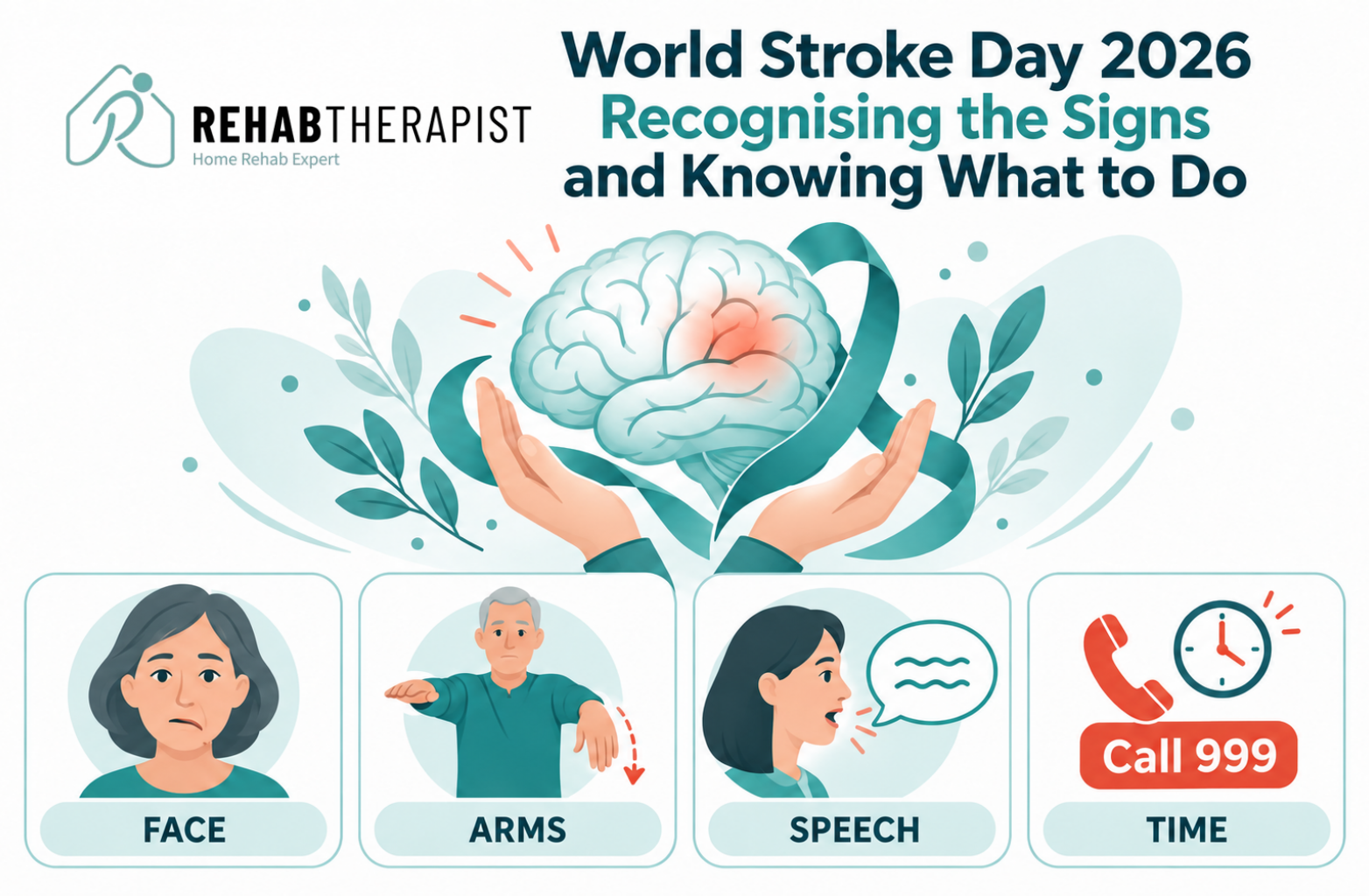
Remember FAST:
- Face: One side may droop, or their smile may look uneven.
- Arms: They may struggle to lift both arms and keep them raised.
- Speech: Their speech may become slurred or confused.
- Time: Call 999 straight away.
Other sudden symptoms can include sight loss, weakness down one side, dizziness or a severe headache. Symptoms that stop still need urgent attention. The NHS guidance on recognising a stroke explains these warning signs and when to call.
Finding Your Feet at Home After a Stroke
Once you’re home, familiar things can take more thought. Getting to the kitchen table or holding your usual mug may be harder than before.
Family members can find this difficult too. You may want to try something yourself, while they’re worried you might fall. Tell your rehabilitation team where this happens. They can assess the task and explain what you can practise safely, including when and how someone should help.
Start with something that matters to you, whether that’s getting into your chair or needing less help at breakfast. It gives the team a clear idea of what you want to work towards.
Give the physiotherapist the everyday details
You might remember to mention that walking is difficult, but forget to explain that turning into the bathroom is the worst part.
Try to describe the whole task:
- “I can stand up, but I feel unsure before taking a step.”
- “Getting into bed needs more help than getting out.”
- “My partner isn’t confident in helping me move.”
- “I don’t know whether I’m doing the exercise correctly.”
These details help give the assessment a practical focus.
Through neurological physiotherapy at home, Rehab Therapist assesses movement and provides treatment that include balance, strength, co-ordination and walking practice. Advice about mobility aids and support for carers can also form part of the plan.
Our article on what stroke rehabilitation at home involves looks more closely at this work.
The family is learning, too
There may be someone at home quietly worrying about whether they are helping properly. They want to encourage independence, but they’re frightened of a fall.
Bring that worry into the appointment. With the person’s agreement, a relative or carer can ask questions and receive guidance about suitable assistance.
Ask to be shown anything you’re unsure about. Don’t attempt a difficult lift or transfer without appropriate training and equipment.
If discharge is approaching, our guide to physiotherapy after hospital may help you prepare questions about support at home.
Notice what matters to the person recovering
It’s natural to ask, “Are you walking any better?” But they may be more concerned about getting dressed or managing a visit from friends.
Let those priorities shape the conversation. Recovery varies, and some people need rehabilitation over months or years. Goals should be reviewed as needs change.
This World Stroke Day, talk through FAST with someone you know. If stroke has already affected your family, make time to discuss what support is needed now.
For planned home stroke rehabilitation, call Rehab Therapist on 0330 551 3660. For suspected stroke symptoms, call 999 immediately.
Frequently Asked Questions
Should I call 999 even if I’m unsure?
Yes. If you suspect a stroke, explain what you’ve noticed and follow the call handler’s advice.
What if the person seems fine again?
Call 999 if stroke symptoms happened within the last 24 hours, even if they have stopped.
Can physiotherapy continue at home?
Yes. An assessment can help identify suitable treatment, goals and the assistance needed.
Can a family member join the visit?
Yes, with your permission. They can ask questions about supporting you between appointments.
What if recovery still feels difficult months later?
Speak to your stroke team or GP about the difficulties you’re having and whether a rehabilitation review would be useful.
How can a Rehab Therapist help after a stroke?
We offer home physiotherapy to support movement, balance and everyday independence.
What happens during a home visit?
We assess your movement, discuss your goals and agree on a treatment plan with you.
